
British Archives Show Officials Labeled Zionist Militia Attacks 'Jewish Terrorism' Years Before 1948
Newly examined National Archives files show MI5 and Mandate officials tracked Zionist armed groups and privately rejected the statehood claims later used to justify Israel's founding.
Source: The New Arab · published November 2, 2026
A British intelligence lecture dated 8 January 1948 carries a plain heading in the National Archives file: "Jewish Terrorism." The document, examined by The New Arab, is part of a larger set of Mandate-era British records that tracked Zionist armed groups in Palestine in the years leading up to the 1948 Nakba, and it shows that British officials used the word "terrorism" to describe their activity in internal paperwork, not polemic.
The file sits alongside a secret report dated 2 September 1946 from James Robertson, then head of MI5's Middle East section. According to the archive material, Robertson argued that the 1917 Balfour Declaration had never committed Britain to the creation of a Jewish state, and that Zionist leaders had attached a meaning to the declaration that exceeded its original wording. Robertson's assessment identified three methods the Zionist movement was using to press its case, the files show: propaganda, irregular immigration into Palestine, and terrorism.
"Jewish Terrorism" — heading of a British intelligence lecture, National Archives, 8 January 1948
Condemnation without cooperation
Mandate-era reports from Sir Harold MacMichael, the British High Commissioner, trace a shift in the Jewish community's public posture toward the violence. In February 1944, MacMichael reported that Jewish newspapers and organizations were denouncing attacks but showing little willingness to help police investigations, according to the archive material. By October of that year his language had hardened: he warned London that sympathy for armed militants had grown, particularly in Tel Aviv and other Jewish urban centers. The assessment did not claim universal support for the attacks, but it described British officials growing skeptical that public condemnations reflected the real mood on the ground.
The Jewish Agency bombing
The archive also contains a confidential report by Sir Alan Cunningham, the last British High Commissioner for Palestine, on the 11 March 1948 bombing of the Jewish Agency headquarters in Jerusalem, an attack that killed 13 people, all Jewish, seriously wounded 33, and left 51 others with minor injuries. According to the report cited by The New Arab, a vehicle belonging to the American consulate entered the Jewish Agency compound shortly before the explosion, driven by Anton Camillo Daoud, a Palestinian Christian employed by the consulate, and a Jewish security guard reportedly said afterward that he recognized both the vehicle and the driver. The New Arab's cited source material breaks off before the Cunningham report's full account of what followed, and the circumstances of the bombing, including responsibility for it, remain a disputed and only partially reconstructed episode in the historical record.
Why the paper trail matters
The documents do not rewrite the outcome of 1948. What they establish is that the government whose 1917 declaration is cited as a founding instrument for the State of Israel was, within three decades, producing internal intelligence that rejected the statehood interpretation of that same declaration while cataloguing attacks by the Haganah, Irgun and Stern Gang against Palestinians and British forces. The contradiction between Britain's public commitments and its private intelligence assessments is now part of the documentary record at the National Archives, available for the same scrutiny applied to any other state paper trail.
Sources & Documentation
- Balfour anniversary: UK knew of 'Jewish terror' before Nakba — The New ArabPrimary source; cites British National Archives documents examined by the outlet
Related Coverage
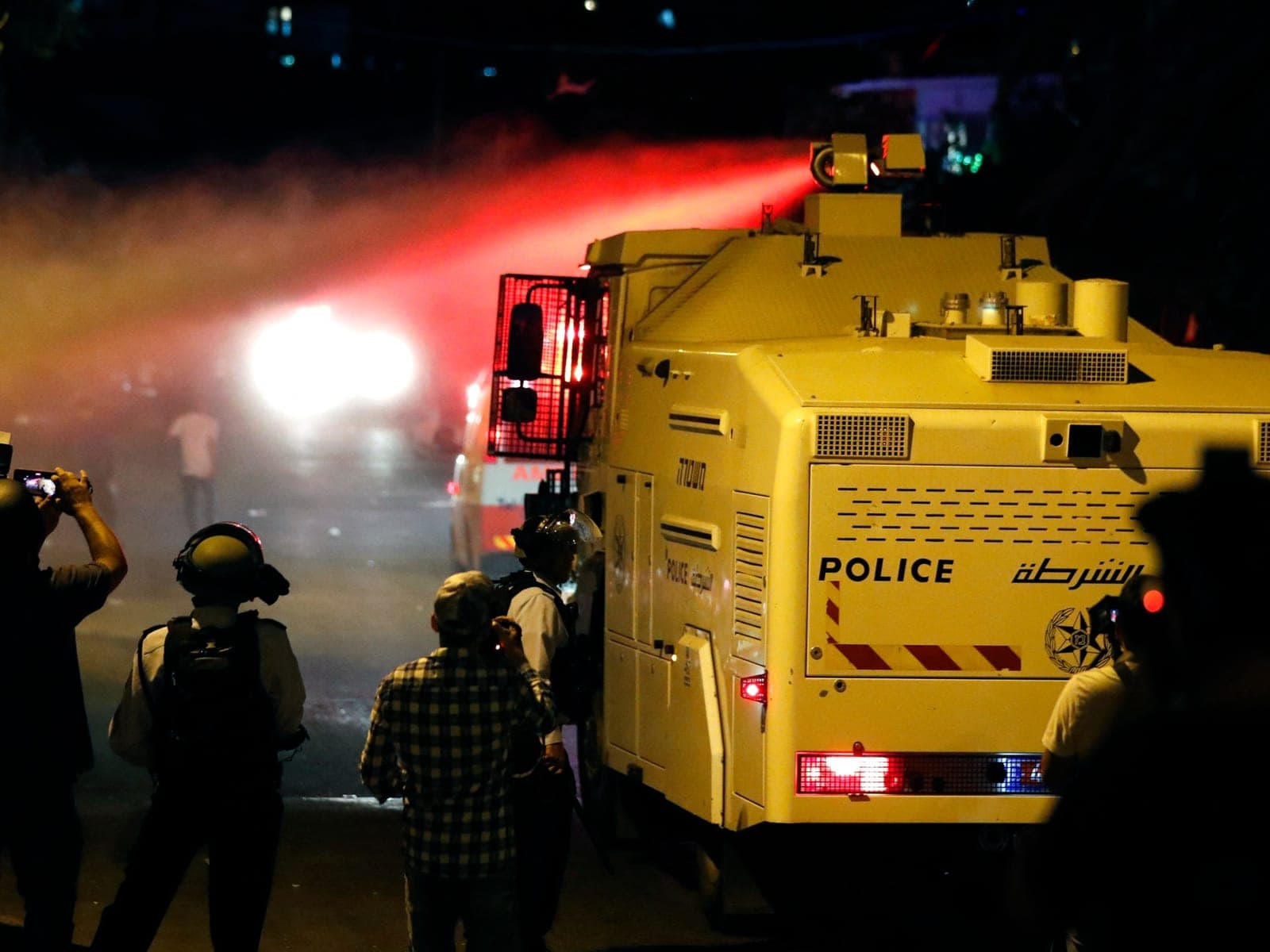
Israeli-Developed 'Skunk Water' Weapon, First Used on Palestinian Protesters, Now Exported to Police Forces Worldwide
Skunk water, built by Israeli firm Odortec with police for crowd control, has sprayed Palestinian homes and schools and is now exported to South Africa, India, Colombia, and the US.

UK Charities Sent $1.3M to East Jerusalem Yeshiva Now Approved to Expand Into Sheikh Jarrah
British charities sent $1.3m to an East Jerusalem yeshiva now cleared to build an 11-storey campus in Sheikh Jarrah, on land occupied since 1967.
UK Public Contracts Worth £2.1 Billion Held by Companies Tied to Israeli Settlements, Investigation Finds
An Al Jazeera investigation finds UK public bodies hold £2.1bn in contracts with 17 companies the UN links to illegal Israeli settlements, led by Motorola's British subsidiary.