
UN and CNN Found Gunfire Killed Dozens at Gaza Aid Convoy; Advocacy Group Says Death Toll Mostly From Stampede
A UN Commission of Inquiry and CNN investigation point to Israeli gunfire in the February 2024 killing of at least 112 Palestinians near an aid convoy; HonestReporting disputes the account and says most died in a crush.
Source: The New Arab · published October 28, 2026
Mutaz was found slumped against a wall, still clutching a bag of flour that had darkened with his blood. He was seventeen. Two bullets had struck him in the back. His family found him only after following a trail of blood through the chaos near an aid convoy in northern Gaza on February 27, 2024.
That day, thousands of starving Palestinians had gathered around trucks delivering humanitarian flour. At least 112 people were killed and hundreds injured in what has become known as Gaza's flour massacre, according to field medical reports, a UN Commission of Inquiry analysis, and a CNN investigation that examined dozens of videos, 22 eyewitness accounts, and forensic evidence. The UN inquiry identified horizontal tracer rounds and gunfire in footage reviewed from the scene, consistent with the kind of imagery that circulated from the convoy that morning.
Israel has rejected the findings and has characterized international criticism of the incident as biased.
A disputed account
In October 2025, the pro-Israel advocacy organization HonestReporting published an article listing the flour massacre among what it called 25 media falsehoods about Israel's war in Gaza. The group's account, examined here through the article's own text, holds that the overwhelming majority of victims were crushed in a stampede or run over by aid trucks, and that approximately ten were killed by Israeli gunfire after approaching military positions. The article accuses news outlets of uncritically repeating accounts from Hamas-run authorities.
That framing narrows the question of responsibility to the mechanics of how people died in the crowd, rather than the conditions that drove thousands of people into that crowd in the first place. It sits alongside, not instead of, the UN and CNN findings, which remain contested between the two accounts.
The siege before the convoy
Two days after October 7, 2023, Defence Minister Yoav Gallant ordered Gaza cut off from food, water, electricity and fuel, a policy that was followed by aid restrictions and strikes on bakeries. By November, all five of Gaza's flour mills had gone silent, according to the author's account. On the same day as the massacre, the UN warned that 576,000 Palestinians, a quarter of Gaza's population, stood on the brink of famine.
Mutaz had set out with two cousins toward the convoy without telling his family, hoping to bring food home. He never returned.
"Our hunger sent my son to his death."
His mother wept over his body and cursed all the flour in the world, according to the family's account. Hers is not a line in a commission report. It is what was left after the trucks came and went.
Sources & Documentation
- How Israel evades responsibility for Gaza's flour massacre — The New ArabPrimary source, first-person account and analysis
- untitled clip — YouTubeDocumentary footage referenced in reporting on the incident
Related Coverage
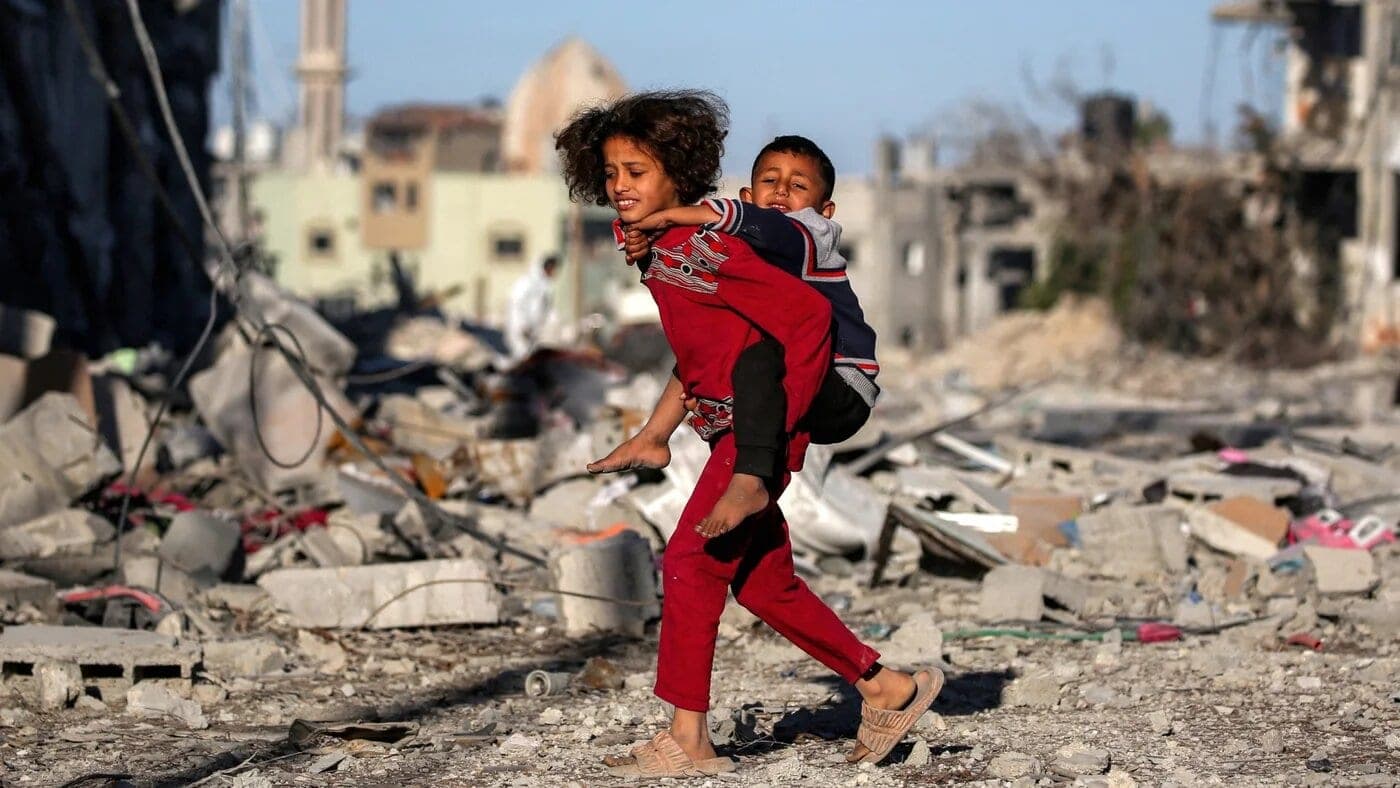
Egyptian Firms Surveyed Rafah Ruins Under Israeli Military Escort for 'Green Rafah' Housing Plan, Sources Say
Egyptian firms surveyed Rafah's ruins under Israeli army escort for a UAE-backed 'Green Rafah' housing project, sources tell Middle East Eye, as reconstruction remains under Israeli military control.

UN Verifies 1,076 Deaths in Gaza Since Ceasefire Took Effect, Including 268 Children
UN OHCHR verified 1,076 deaths in Gaza since the October 2025 ceasefire, including 268 children, as hospitals and shelter remain in collapse.

Updated Google Maps Imagery Shows Gaza Towns Still in Ruins a Year Into Ceasefire
Updated Google Maps satellite imagery from June shows Gaza's northern towns, Rafah and Tel al-Sultan in ruins, with UN data showing destruction rising since the ceasefire.