
UN Verifies 1,076 Deaths in Gaza Since Ceasefire Took Effect, Including 268 Children
A year after the October 2025 truce was declared, UN investigators say Israeli fire has kept killing civilians, including dozens near the so-called Yellow Line.
Source: Middle East Monitor · published October 15, 2026
The ceasefire the Trump administration announced for Gaza on October 10, 2025 was supposed to mean the shooting stopped. The United Nations says it did not.
According to the UN Human Rights Office (OHCHR), investigators verified 1,076 conflict-related deaths in Gaza between October 10, 2025 and the end of July 2026, including 268 children. A separate OHCHR count found at least 331 Palestinians, including 66 children, killed near the so-called Yellow Line, the informal boundary Israeli forces have drawn across the enclave. The office said the dead included people carrying out ordinary civilian activities and some killed inside their own tents.
The UN warned that killing civilians who are not directly participating in hostilities is a war crime, regardless of where they are killed.
Gaza's Health Ministry, whose casualty data the UN routinely cites, has put the broader toll since the ceasefire at roughly 1,498 Palestinians killed and 5,306 injured as of mid-October 2026, a figure that includes a report of seven people killed, among them an eight-year-old girl, on the ceasefire's first anniversary. Islamic Relief, the aid organization, has said a Palestinian is killed or injured by Israeli fire on average every 90 minutes despite the truce; that figure has not been independently verified.
The cumulative toll of the war that began in October 2023 now stands, by the Health Ministry's count, at 74,389 Palestinians killed, including 21,976 children, close to 30 percent of the dead, and 175,423 injured.
A hospital system with nothing left
The killing has continued alongside a humanitarian collapse the ceasefire was meant to begin reversing. The World Health Organization reported on October 2 that not a single hospital in Gaza was fully functional, citing chronic shortages of medicine and medical supplies. Humanitarian groups have described a median wait of around 74 days for Israeli authorities to approve medical shipments, a delay that does not include the time needed to actually deliver the goods once cleared.
The UN Office for the Coordination of Humanitarian Affairs says roughly 279,000 people are sheltering in 400 flood-prone displacement sites, and that more than 2,300 buildings across Gaza are unsafe and need to be demolished, with nearly 44,000 people currently living inside them. Humanitarian officials say Israeli restrictions on the entry of equipment, spare parts, and construction materials continue to slow repairs to water and sanitation systems.
Food access improved somewhat in the months after the ceasefire took hold, aid groups say, but never reached a level residents describe as secure. With winter approaching and rebuilding largely stalled, the gap between the word "ceasefire" and conditions on the ground in Gaza remains, by the UN's own documentation, wide.
Sources & Documentation
- The ceasefire that keeps killing children: Gaza one year on — Middle East Monitor
Related Coverage
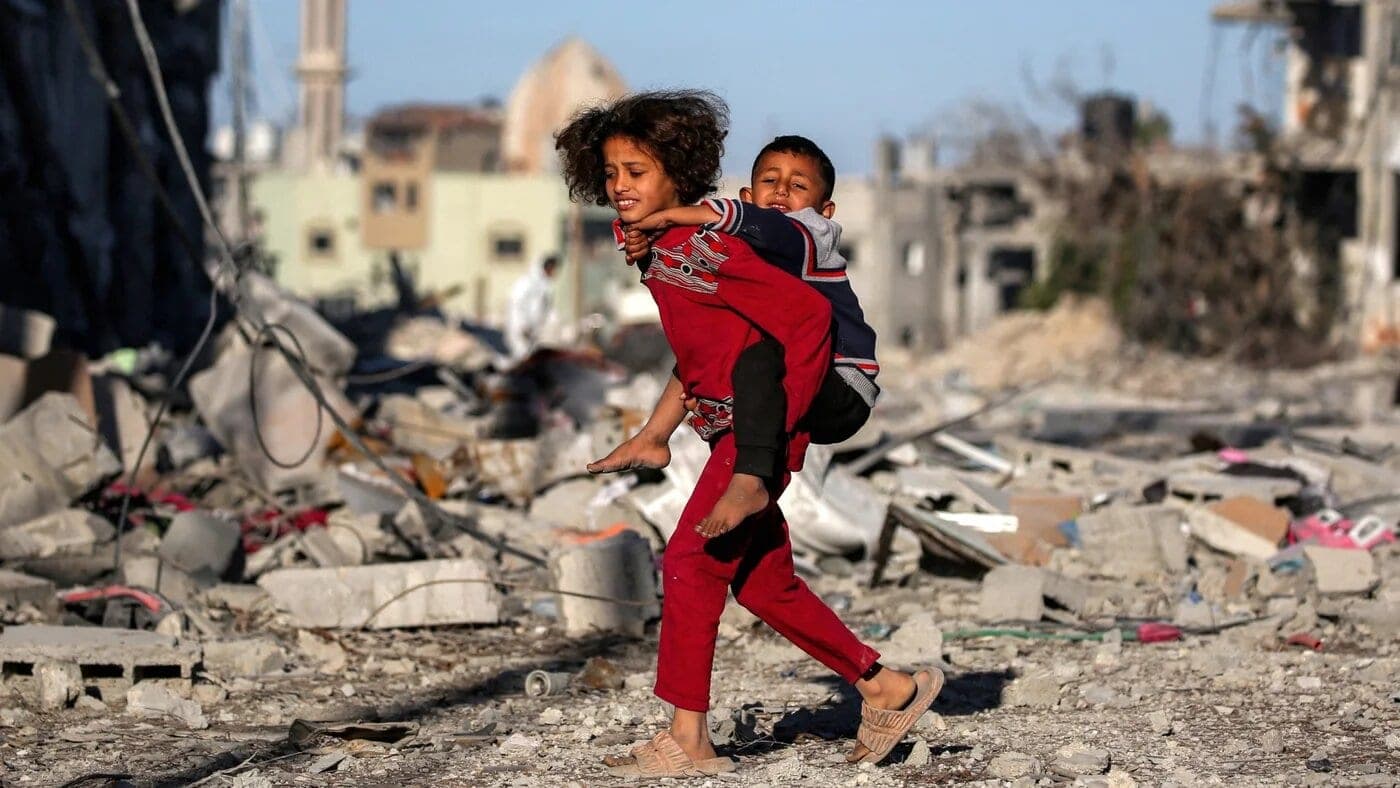
Egyptian Firms Surveyed Rafah Ruins Under Israeli Military Escort for 'Green Rafah' Housing Plan, Sources Say
Egyptian firms surveyed Rafah's ruins under Israeli army escort for a UAE-backed 'Green Rafah' housing project, sources tell Middle East Eye, as reconstruction remains under Israeli military control.

Updated Google Maps Imagery Shows Gaza Towns Still in Ruins a Year Into Ceasefire
Updated Google Maps satellite imagery from June shows Gaza's northern towns, Rafah and Tel al-Sultan in ruins, with UN data showing destruction rising since the ceasefire.
Israeli Army Quadcopters Killed at Least 60 Gaza Civilians Since October 2025 Ceasefire, Rights Monitor Finds
Euro-Mediterranean Human Rights Monitor documents Israeli quadcopters killing at least 60 Gaza civilians since the October 2025 ceasefire, calling the pattern deliberate.