
MEE Opinion Piece Traces Journalist Killings and Gaza Press Ban to What It Calls Israel's 'Information War'
A Middle East Eye essay links the unresolved killing of Al Jazeera's Shireen Abu Akleh to a broader, decades-long pattern of blocking independent coverage of Israeli military operations.
Source: Middle East Eye · published September 14, 2026
A Middle East Eye opinion piece published September 14 argues that the killing of journalists covering Israeli military operations, and the barring of foreign press from Gaza, are not isolated incidents but part of what the author calls a sustained campaign to control wartime narratives.
The essay's central case is Shireen Abu Akleh, the Al Jazeera correspondent shot in the head on May 11, 2022, while covering an Israeli raid on the Jenin refugee camp in the occupied West Bank. She was wearing a vest marked "Press." Her killing has been documented by multiple international investigations and press-freedom organizations. The essay goes further, citing an unnamed investigative documentary that identifies the shooter as a member of the Israeli military's Duvdevan unit, and claims he faced no disciplinary consequences before being killed in Jenin in June 2024. Occupation Watch has not independently verified the shooter's identity or the account of his later death; both claims rest on the documentary cited in the essay rather than on Israeli military records or a court finding.
The piece situates Abu Akleh's killing inside a pattern tracked by the Committee to Protect Journalists, which has documented at least 20 journalists killed by Israeli fire between 2001 and 2022 with no prosecutions. CPJ has separately reported more than 250 Palestinian journalists and media workers killed since October 2023, a toll the organization has called unprecedented in the history of its record-keeping. The essay cites a CPJ finding that 2025 was the deadliest year for journalists on record globally, with Israel responsible for two-thirds of those deaths, though it does not link the specific report.
The Gaza press ban
Since the war began, Israel has not permitted foreign journalists to enter Gaza independently. Reporters are limited to escorted military tours, which journalists who have taken part have described as staged. The Foreign Press Association, which represents international media covering Israel and the Palestinian territories, has said there is no security justification for the restriction.
"No security justifications" exist for the blanket ban, the Foreign Press Association has said, according to the essay.
The author traces the roots of this posture to September 30, 2000, when French television footage captured 12-year-old Muhammad al-Durrah being shot dead at the Netzarim junction in Gaza. An Israeli army spokesman initially accepted responsibility for the shooting, a position Israel later disputed. The incident remains one of the most contested images of the Second Intifada and, the essay argues, hardened Israeli military doctrine toward controlling what cameras are allowed to record.
The essay opens with an account of Hassan Ayyad, a 14-year-old Palestinian who it says was killed in an Israeli air strike in May 2025 after his singing videos from Nuseirat camp went viral. Occupation Watch could not independently confirm the date, location, or circumstances of Ayyad's death from the record available.
The essay's broader argument, that information control by militaries has evolved from Vietnam-era press freedom through Gulf War "embed" restrictions to today's blanket bans on Gaza access, is presented as analysis rather than new documentary evidence. The journalist casualty figures and the Gaza press restrictions it cites are independently corroborated by CPJ and the Foreign Press Association.
Further Documentation
Sources & Documentation
- Netanyahu's 'eighth front': Israel's billion-dollar war on the truth is failing — Middle East EyePrimary source, opinion piece
- Committee to Protect Journalists reports on journalist deaths in Israel-Gaza conflict — Committee to Protect JournalistsReferenced casualty data
Related Coverage
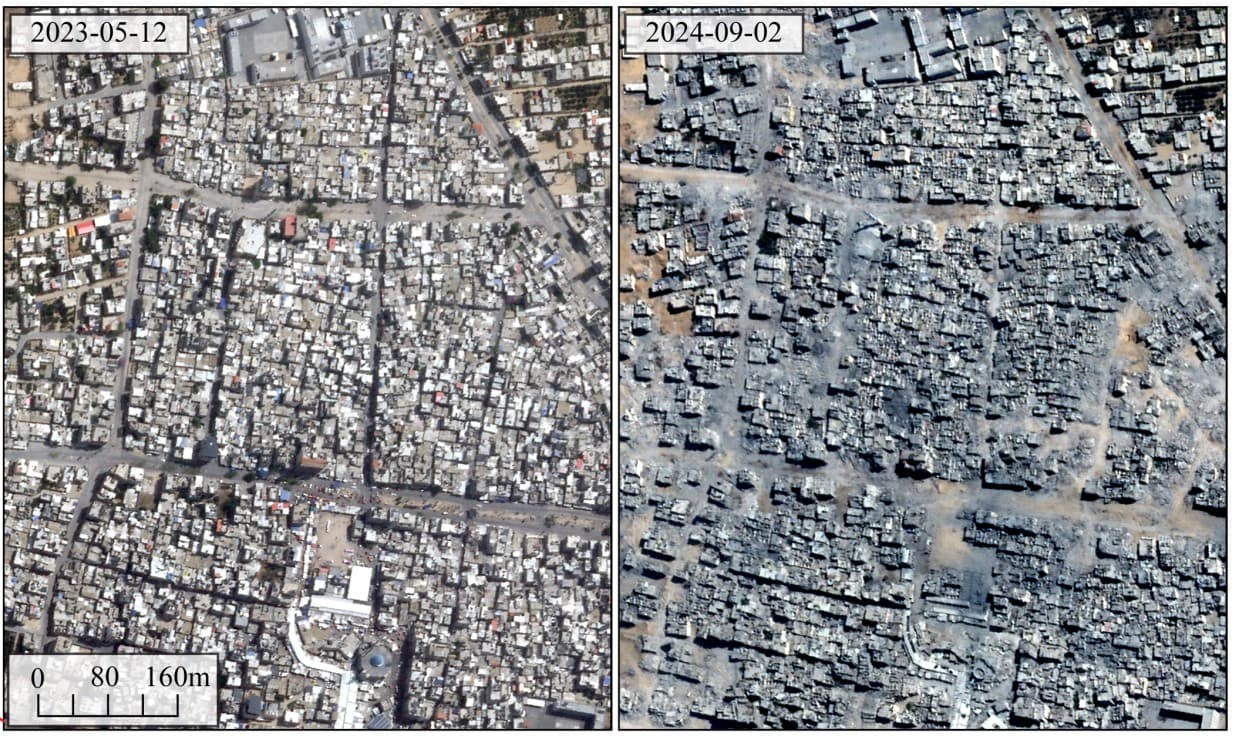
Planet Labs Made Gulf Satellite Imagery Restrictions Indefinite After US Government Request, Cutting Off a Key Tool for Verifying Wartime Strikes
Planet Labs made its satellite imagery blackout over Iran and the Gulf indefinite at the US government's request, alarming open-source analysts who use such imagery to verify wartime damage.

Israel Paid a PR Firm to Build a Fake Think Tank That Feeds AI Chatbots Pro-Israel Talking Points
A think tank with no bylines and 100+ articles in a week was built by an Israeli-funded PR firm to manipulate AI chatbot answers on Israel and Gaza.

UK Banks Close Accounts of Pro-Palestine Activists, Including the Mother of a Jailed Protester
Named UK Palestine advocates, including a jailed activist's mother and broadcaster George Galloway, say banks closed their accounts without explanation amid rising 'debanking' complaints.